

US lifts sanctions on Syria as nation marks one year without Assad
The US imposes sanctions on Syria in what many are hailing as one of the biggest geopolitical changes of the Middle East in over ten years. The statement was made on a historic week to the Syrians who are also celebrating one year since the fall of Bashar al-Assad rule, a decade that may be regarded as the final chapter in the contemporary history of the nation.
To average citizens, the US lifting sanctions on Syria is not only a news headline but an economically and socially bright moment. The years of restrictions had brought down banking channels, limited trade and basic imports like fuel, medicine and industrial machinery were hard to reach. The lifting of the sanctions has brought about the hope of an economic respite, creation of jobs and reinvigoration of the international economy.
How US lifts sanctions on Syria could jump-start reconstruction and everyday life

The Washington officials said the ruling represents the shifting reality on the ground. The US imposes sanctions on Syria according to the U.S. policymakers as a measured policy to aid in reconstruction without sacrificing certain actions against individuals suspected of engaging in war crimes or extremist activities. The relocation will aim at promoting consistency without forsaking accountability.
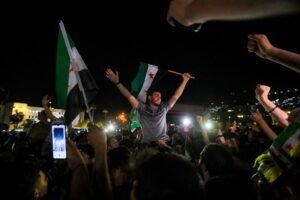
The time could not be more symbolic in Damascus and other big cities. With US imposing sanctions on Syria, thousands of people showed up in the streets to celebrate the first anniversary of the departure of Assad. There were speeches, cultural events and prayer to the dead of the years of war. The atmosphere was said by many Syrians to be cautiously optimistic and not triumphalist as they know that there are still many big challenges ahead.
Economists think that US sanctions to Syria may open iced financial highways to enable Syrian banks to have some access to international systems and facilitate foreign investments. The first priority should be reconstruction of infrastructure affected by the disaster such as power grids, hospitals, schools and housing as long as the funding and technical assistance becomes a reality. Nevertheless, analysts caution that the recovery will not be a few months but years.
The development has also been received by humanitarian organizations. The aid organizations indicate that the US sanctions on Syria could greatly cut down on the bureaucratic hurdles that had slowed down the delivery of life saving aid. Humanitarian exemptions were present in previous sanctions, but relief groups claimed that the banks and suppliers frequently did not go to Syria at all since it was not clear whether it was legal. The new structure will enhance the delivery of aid particularly in health and food security sectors.
Nevertheless, there is still a level of skepticism by the rights groups and political analysts. They emphasize that US sanctions against Syria should be accompanied by actual political reforms, protection of minority rights and open governance. In the absence of effective institutions, critics are alerted that reconstruction funds may be either abused or increased inequalities.
The neighboring countries are keeping an eye on the situation regionally. With the US imposing sanctions on Syria, governments in the region are reconsidering trade routes, the policy on returning refugees, and diplomatic interactions. There are still millions of Syrian refugees in other countries, and their decision to come home will be significantly determined by the financial stability, the assurances of safety, and provision of essential services within the country.
To the interim Syrian leadership, it is obvious. This move by US to sanction Syria is not only an opportunity, but a test. Effective governance, anti-corruption as well as inclusive political dialogue will be necessary in order to transform international goodwill into concrete benefits to citizens.
The overlap of politics and economy reopening, as Syria enters its second year of life without Assad, has revamped expectations nationally. It will be a case of it being a stepping-stone towards stability in the long term or another opportunity wasted by both the leaders of Syria and the world at large, depending on how well the new era is handled responsibly.
read Also this : Amid fractures on the right