

North Korea long-range missile base expansion alarms analysts
Analysts believe that North Korea is secretly developing a long-range missile base previously undeclared, far into the country, which may redefine the way in which Pyongyang is dispersed and its strategic forces survivability. Open-source research and satellite photos indicate new fixed locations, reinforced infrastructure and show that the site is capable of nearly housing several transporter-erector-launchers of intercontinental ballistic missiles. Experts say this development fits into the broader North Korea long-range missile base strategy being pursued by Pyongyang.
Additionally, the strategic implications of the North Korea long-range missile base development could significantly alter regional security dynamics.
The location, often described in the recent literature as the Sinpung-dong complex, is approximately 27 kilometers close to the Chinese border and seems to be intended to put the long-range systems in storage, maintenance and rapid deployment. Analysts who examined the images feel that the facility can house a brigade-sized unit and a number of road-mobiles ICBMs, casting doubts on the capability of North Korea to launch missiles other than the fixed launch pads. This rediscovery of the Sinpung-dong area is after months of careful mapping and study of imagery by the Western think tanks, further reinforcing concerns about the expansion of the North Korea long-range missile base.
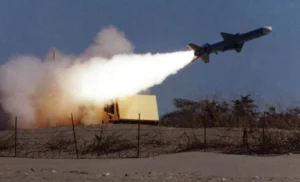

North Korea Long-Range Missile Base Expansion Revealed by Analysts
This growing focus on the North Korea long-range missile base suggests a shift in military doctrine that prioritizes mobility and stealth.
The presence of numerous earth-bermed support structures, drive-through hardened checkout bays cut into mountainsides, increased motor vehicle depots and new access roads, which are traditional signs of a missile operating base and stress concealment and survivability, are portrayed in commercial pictures as well. Analysts point out that vegetation cover and well integrated entrances means that the base is becoming so difficult to detect when it is not in the season of winter and this points to the fact that Pyongyang is working to harden and conceal its strategic assets. These signatures are similar to those observed earlier at other long-range missile sites run by North Korea, including previous locations linked to the North Korea long-range missile base network.
This growth in the location and the associated manufacturing also coincides with several other indications of greater missile-related manufacturing within North Korea. The satellite experts have noted that last year, plants that manufacture solid propellant and liquid-fuel components were being built, which indicates that Pyongyang is likely to be improving its missile storage and production capacity, as well as its production capacity, simultaneously. The increased production together with North Korea long-range missile base enhancements might reduce the schedule of deploying more mobile or enhanced systems.
Capitals of the regions responded cautiously. It has been several months before military planners in Seoul, Tokyo and Washington have warned that an increase in mobile and much more widely dispersed launch capabilities makes the calculations of deterrence and early-warning more difficult. The finding and ostensible modernization at the Sinpung-dong location highlight the importance of the North Korea long-range missile base policy as based on mobility and concealment as opposed to fixed silos or the evident launch complexes. According to the analysts, the trend makes neighboring states review detection methods and response posture, particularly in response to the growing reach of the North Korea long-range missile base.
Such advancements in the North Korea long-range missile base capabilities raise concerns about future military confrontations.
The state media of North Korea unsurprisingly did not confirm it. Pyongyang does not often recognize particular overseas-facing areas of strategic position, and the official rhetoric of the regime is more about it domestic accomplishments, and military development by and large. That formal silence plus active camouflage and underground infrastructure observed in visual imagery would make analysts believe that the leadership expects these locations to be operational and yet deniable during peacetime. There is evidence that suggests the North Korea long-range missile base expansion is not an isolated event but a part of the overall strategy, strengthening the long-term role of the North Korea long-range missile base in regional security calculations.
The implication of this to the region is difficult. At a lower level, harder and less visible locations of operations will be harder to plan strikes and would need more advanced intelligence gathering. At the strategic level, the decentralization of long-range capabilities empower the hand of Pyongyang since it can more easily bargain with its competitors or disarm possible interference. The policymakers are supposed to include the new imagery in the evaluation of the force positions, missile survivability and how quickly North Korea could bring its long-range systems to bear in case of a crisis, especially those tied to the North Korea long-range missile base.
The ongoing enhancements of the North Korea long-range missile base are likely to influence diplomatic negotiations in the region.
Analysts warn that imagery is a powerful indicator, though there is uncertainty in open-source analysis: no one can tell what types of missiles are actually used in the conflict by just looking at the photographs: the type of warheads, their state of readiness, and the operational schemes are impossible to discern. Nevertheless, the recurring theme of construction, the size of reinforced facilities and the associated increase in the size of industrialization all lead to an evidence-based upgrade of the long-range strike infrastructure of North Korea – and, to be more specific, the rise in visibility of Sinpung-dong complex as one of the nodes of the network.
Intelligence services will probably press governments that are digesting the results to have more frequent and higher-resolution surveillance in order to better comprehend deployment schedules and the quantity of missile systems that can be serviced? Up to this point, the visual evidence and the professional commentary both demonstrate that the North Korea long-range missile base proliferation is not just a local construction project; it is a strategic one with ramifications in the field of deterrence, surveillance and stability in the region
Read Also This: Brown University Shooting