


Jerome Powell Under Criminal Investigation: U.S. Political and Market Shockwaves Grow
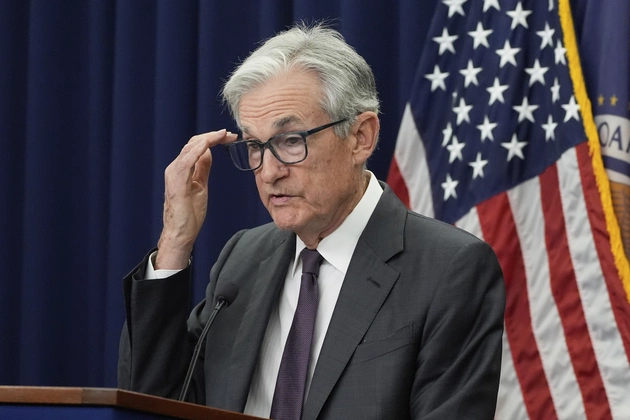
It is a historic and unprecedented event, which is a subject of a federal criminal investigation of Jerome Powell, the Chair of the United States Federal Reserve, which since has caused a storm of political controversy and even shock in world financial markets. This extraordinary twist of events is a dramatic step into the continued conflict between Powell and the U.S. political leadership that poses some serious questions about the independence of the central bank, monetary policies, and the rule of law.
On Sunday, Jerome Powell announced that the U.S. Department of Justice (DOJ) had subpoenaed the Federal Reserve with grand juries, threatening to criminally indict him due to his testimony in front of Congress last year about a big Federal Reserve renovation project. The project, which is a 2-5 year, 2.5 billion refurbishment of Federal Reserve office buildings, has been subjected to scrutiny as the basis of the Justice Department investigation.
Powell strongly defended himself, terming the legal threat to be unprecedented and claiming that the inquiry is not really concerning the renovation project. Rather, he presented it as a wider campaign to coerce the Federal Reserve to alter its monetary policy course especially on interest rates. This danger of criminal prosecution, Powell said, is a cost of Federal Reserve interest rates, based on our own judgment of what is best to serve the people, instead of on what the president prefers to do.
Claims that Powell can have lied to the Congress which are one of the main assertions of the prosecutors are based on his testimony regarding the extent of the renovation and control. However, in the political and legal arena, the critics of the investigation believe that the prosecution drive is politically inclined, and it is meant to strip the Fed of its free will by making it subject to outside influences on its decision-making with regard to interest rates.
Fed Independence Case and Political Fallout and Debate Jerome Powell Case.
The administration of President Donald Trump has openly criticized Jerome Powell over his reluctance to lower the interest rates ferociously on the claim that higher rates are detrimental to the growth of the American economy. The opponents of Trump, in turn, point out that monetary policy decisions are the prerogative of the Federal Reserve, independent of the situational political pressures.
One such Senator was Thom Tillis, who criticized the move by the DOJ, saying that it would be a dangerous precedent to allow the political interference into the monetary policy and would destroy trust in one of the most influential central banks in the world. This was also promised by Tillis to block any new nominations of the Fed until the matter is resolved.
This case is gaining attention among legal specialists whereby despite the wide powers of the Department of Justice to examine any alleged offense, to prosecute a sitting Fed Chair to testify in relation to policy issues is practically unheard of to occur in the history of the USA. When taken to its logical conclusion, the case would give rise to new constitutional issues on the extent of prosecutor power and the rights of independent policymakers such as Powell.
Market Response and Economic Implications.
The news of Jerome Powell was taken in by the financial markets quickly. U.S. stock futures fell as investors re-assessed the risk, whereas the U.S. dollar fell against the world currencies in the concern that political interference with the monetary policy would destabilize the world finances. In the meantime safe-haven assets like gold went to all-time highs as traders fled rising uncertainty.
Analysts caution that the episode might be of lasting consequences to market expectations and interest rate predictions. The Federal Reserve led by Jerome Powell in the last few years has been in a delicate balancing act between preventing inflation as well as abetting labor markets and often politely opposing the urge to cut or raise the rates spontaneously. Any sign of a loss of Fed independence may make the future communication of the policy and future economic projections a bit difficult.
Greater Legal and Institutional Environment.
This scandal is in line with other controversial legal fights concerning the Federal Reserve. Another case in the Supreme Court – Trump v. Cook — that another Fed governor was being sought to be removed by the White House, highlights larger conflicts as to presidential power and the constitutional autonomy of the members of the Federal Reserve Board itself.
The result of such cases would possibly redefine the functioning of the future Fed leadership in the context of the American constitutional system which will influence the way monetary policy may be cloaked by political influences. This comes especially at such a time when the global economic strain and the unpredictability in the geopolitical arena have already begun to put the central banks around the world to the test.
The Discovery of Jerome Powell and his Image.
Although legal and political turbulence has been rife nowadays, Jerome Powell has been enjoying relatively high approval ratings amongst economists and other financial professionals. Even there was a recent poll indicating that Powell was one of the most popular senior U.S. officials with huge bipartisan backing. His followers attribute to him the preservation of the independence of the Federal Reserve and the maneuvering of the tricky economic circumstances.
Nevertheless, the legacy of Powell, as well as the organization he commands, is now undergoing one of the most critical challenges. Regardless of the direction of the criminal investigation, be it continued or dismissed, the political and legal results of the process in terms of central bank governance, orthodoxy of monetary policy, and separation of powers are overwhelming. This story is something that will be followed with a lot of attention in the weeks and months that come.